
The Reality of Starting Trading: Unfolding the Professional Path
Most individuals enter the financial markets chasing a polished dream manufactured by broker marketing departments. We exist to strip away the illusions. Trading is not a magical shortcut to wealth; it is a high-stakes arena where market intelligence, psychological fortitude, and cold discipline are your only true allies against global volatility.
Forensic Briefing:
In 2026, the barrier to entry has never been lower, yet the barrier to profitability has never been higher. This guide serves as the definitive manual for those who want to be seen not just as retail participants, but as professional operators in the global liquidity pool.
What Is Trading, Really?
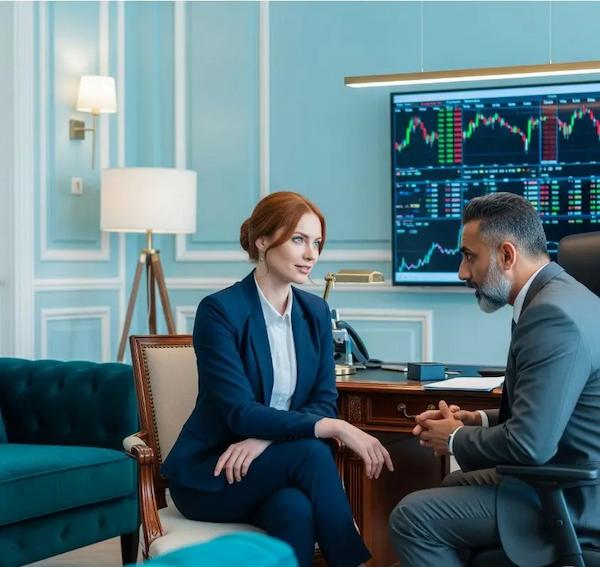
At its core; trading is the strategic exchange of financial instruments within a global marketplace. Whether you are navigating our forex trading guide or deciphering what is CFD trading; your objective is singular: extracting capital from price fluctuations across stocks; crypto; and commodities.
The “dark side” of the retail industry attempts to distract you with complex indicators like RSI; MACD; or Bollinger Bands. While these serve as tools; they are functionally useless without a deep comprehension of market sentiment; order flow; and institutional liquidity. Beginners often fall into the trap of thinking more screens and more indicators equal more profit.
True success does not require a prestigious Wall Street office or a math degree. It requires a radical rejection of the “get rich quick” mentality. To survive the institutional traps set for retail participants; you must adopt a systematic; business-like approach to every tick of the clock. If you approach this like a hobby; the market will treat you like a donor. To unfold the truth; one must first accept that the market is a zero-sum game where your profit is someone else’s loss.
The Information Asymmetry Gap: Retail vs. Institutional
To truly unfold the reality of the markets; one must understand the concept of Information Asymmetry. The retail industry sells a dream where a beginner with a laptop and a moving average crossover can compete with global hedge funds. This is a mathematical impossibility. While you are looking at a 15 minute chart with delayed data; institutional algorithms are processing millions of orders per second using Level 2 and Level 3 market depth. They see the entire order book; while you only see the history of what has already happened.
Most retail platforms provide what is known as “Snapshot Data;” which only updates every few hundred milliseconds. In contrast; professionals utilize Co-located servers sitting directly inside the exchange data centers. This speed advantage allows them to see your “Stop Loss” orders before they are even triggered; creating the “Stop Hunting” phenomenon that most beginners mistake for bad luck. They aren’t lucky; they are simply faster and better equipped.
Starting trading successfully requires you to move away from “lagging indicators” and toward understanding Order Flow. By studying how liquidity is distributed across the price ladder; you begin to see the footprints of the big players. This transition from being a “Chart Pattern” trader to a “Liquidity” trader is the first step in surviving the dark side of the markets.
Institutional players often use “Iceberg Orders” to hide their true intentions. They will show a small buy order on the surface while having thousands of lots waiting behind it. If you do not understand how to read these footprints; you will always be caught on the wrong side of the momentum. Professionals don’t predict; they react to the revealed intentions of the market’s biggest movers. This is the difference between gambling and high-frequency speculation.
The Liquidity Hunt: Why Your Stop Loss is a Target
Have you ever noticed that the market often hits your stop loss with surgical precision before immediately reversing in your predicted direction? This is not a coincidence. Large institutions, such as commercial banks and hedge funds, require massive amounts of liquidity to enter or exit their positions. They cannot simply click “Buy” for $500 million without causing a massive price spike that would ruin their entry price.
Instead, they look for “Liquidity Pools.” These are areas on the chart where a high concentration of retail stop losses are located, typically just above recent highs or below recent lows. By pushing the price into these zones, they trigger a wave of sell orders (your stop losses), which provides the necessary counterpart to their massive buy orders.
Understanding this is the key to unfolding the “Dark Side” of price action. Instead of placing your stop loss where everyone else does, you must learn to think like a liquidity provider. You must identify where the “Herd” is hiding and realize that those levels are targets for the smart money. Professional trading is about being the one who provides the liquidity at the right time, rather than the one being hunted for it. This shift in perspective is what separates the 5% of winners from the 95% who eventually blow their accounts.
The Hard Truth About Modern Trading
Modern trading applications have made clicking the “Buy” button dangerously effortless. However, this convenience often serves as a mask for the truth about forex brokers. Many retail platforms operate on a “B-Book” model, meaning they directly profit when you lose. They are not your partners; they are the house in a casino where they control the deck.
Without professional risk management trading strategies, you are not an investor; you are simply providing the “exit liquidity” that major banks and hedge funds need to fill their own orders. Staying alert is your only defense against the forex broker scams that prey on the uninformed.
The reality of the B-Book environment is that your “trades” may never even reach the actual market. They are internalized, meaning the broker simply keeps your deposit and hopes you lose. This conflict of interest is the foundation of the retail industry. To combat this, you must demand transparency and seek out brokers who utilize A-Book vs B-Book execution or ECN (Electronic Communication Network) protocols where your orders are matched with real market participants.
Understanding this mechanical difference is vital for your survival. When you trade with a B-Book broker, you are playing a game against an opponent who sees your cards. By moving to an A-Book environment, you ensure that the broker is incentivized by your success through commissions, rather than being fueled by your liquidation. This is the first step in moving from the dark side of retail gambling toward institutional-grade speculation.
How to Get Started: The Professional Framework
Do not focus on profits yet. Understand how supply; demand; and central bank policies actually move the needle before risking a single dollar. You must learn the language of economic indicators and how they impact currency strength.
If you do not understand your broker’s business model; you are the product. Seek out ECN execution and regulatory transparency above all else. Research their jurisdiction and ensure they have a history of honoring withdrawals.
Before you enter the fray; you must respect the dangers of leverage in trading. It is a tool that can build empires or destroy them. Leverage is a multiplier of your mistakes just as much as your successes.
If you possess the skill but lack the funding; investigate our prop trading guide. Modern prop firms allow you to leverage institutional capital once you have proven you can manage risk effectively.
The Mathematics of Expected Value
A professional trader does not think in terms of “winning” or “losing.” They think in terms of Expected Value (EV). This is a mathematical formula that combines your win rate with your risk-to-reward ratio. If you have a strategy that wins 40% of the time; but your average win is 3 times larger than your average loss; you have a positive expectancy. You will make money over time even though you lose more often than you win.
The retail trap is the obsession with high win rates. Many scammers sell “90% win rate” systems. What they don’t tell you is that the 10% of losses are so large they wipe out all previous gains. This is negative expectancy; and it is a mathematical certainty that it will lead to account ruin.
To unfold the professional path; you must start logging every trade in a journal. You need to know your “Average Winner” and “Average Loser” to the cent. Without this data; you are flying blind. Trading is a game of probabilities; not certainties. By focusing on systems with positive EV; you remove the emotional burden of any single losing trade; because you know the math will work in your favor over a sample size of 100 trades. This is how the “Best of the Best” operate: they are essentially running a personal insurance company where they collect premiums from the market’s volatility.
Hardware and Infrastructure: Beyond the Smartphone Trap
The rise of “mobile trading” is perhaps the most successful trap the retail industry has ever laid. Trading on a smartphone encourages impulsive, emotional, and low-precision execution. It turns a serious financial profession into a dopamine-fueled game similar to social media. A professional trading environment is built on stability, screen real estate, and low-latency connectivity.
To operate at the “Best of the Best” level, you must treat your setup as a mission-critical business office. This includes utilizing a hardwired Ethernet connection to minimize “jitter” and slippage during high-volatility events. Relying on Wi-Fi or 5G during a central bank interest rate decision is a recipe for catastrophic execution failure. You need to see the data as fast as the exchange provides it.
Screen real estate allows you to watch correlated markets simultaneously. For example, if you are trading the Euro, you should also be watching the US Dollar Index (DXY) and German 10-year bond yields. You cannot do this on a 6 inch screen. Professionalism begins with your environment. If your setup looks like a hobby, your results will reflect that.
The Professional Checklist:
- ✔️ Dual-Monitor setup for correlated pair analysis.
- ✔️ Dedicated Trading OS with minimized background processes.
- ✔️ Redundant internet connection (Backup 4G/5G).
- ✔️ Uninterruptible Power Supply (UPS) for hardware protection.
- ✔️ Professional charting software (TradingView or MT5 Desktop).
Unfolding the Conflict: The Myth of Broker Education
One of the most insidious aspects of the “Dark Side” is the free education provided by B-Book brokers. When a broker’s primary revenue comes from trader losses; their educational materials are strategically designed to create “Market Noise.” They teach you to use retail indicators like the RSI or Stochastic Oscillator in a way that actually makes your behavior predictable to their internal dealing desks.
By following standard retail advice; you become part of the “Herd Liquidity.” The broker knows exactly where you will place your stop loss because they taught you to put it there. They want you to trade frequently because every trade generates spread or commission revenue for them. To break this cycle; you must look toward independent Market Intelligence that focuses on macroeconomic fundamental drivers and central bank liquidity cycles.
True professional education focuses on capital preservation and mathematical expectancy. If a guide focuses more on “Winning Big” than on “Losing Small;” it is marketing; not education. Our goal is to provide the intelligence needed to navigate these conflicts of interest and build a career based on the cold; hard truth of the numbers. You must learn to trade against the retail herd; not with it. When the news is most bullish; the smart money is often looking for an exit. Unfolding these patterns is what creates a sustainable edge.
The Psychology of the Void: Embracing Uncertainty
The hardest part of trading isn’t the charts; it’s the person staring at them. Most humans are biologically hardwired to fail at trading. We are programmed to seek safety; avoid pain; and find patterns even where they don’t exist. In the market; these instincts lead to “Revenge Trading;” “FOMO” (Fear of Missing Out); and “Aversion to Loss.”
Professional trading requires you to operate in “The Void;” a state of complete emotional detachment from the outcome of any single trade. When you have a leveraged position open; your brain will scream at you to close it for a small profit or hold it through a massive loss in hopes of a “break-even” exit. This is the Gambler’s Fallacy.
To overcome this; you must treat your trading like an algorithmic process. You are the manager of a system; not a hero trying to conquer the market. The moment you feel your heart rate increase or your palms sweat during a trade; you are over-leveraged or under-prepared. Unfolding the professional path means training your mind to accept that you can be 100% right in your analysis and still lose money on the trade. Mastering this paradox is the final hurdle in the journey from retail novice to market professional.
Critical Blunders to Dodge
“The market never truly hides its secrets. It only waits for those wise enough to unfold them and disciplined enough to act upon the truth rather than the noise.”

The 2026 Regulatory Landscape
Regulation is your first line of defense against the “Dark Side” of the industry. As we move through 2026; major regulatory bodies like the FCA; ASIC; and CySEC have tightened the screws on retail brokers. These regulations include mandatory negative balance protection; leverage caps for retail traders; and segregated client funds.
However; many predatory brokers bypass these rules by operating in “Offshore” jurisdictions with virtually no oversight. They lure you in with 1:1000 leverage and “Deposit Bonuses” that make it impossible to withdraw your initial capital. If a broker’s main selling point is high leverage and easy deposits rather than execution quality and regulatory safety; you are walking into a trap.
Always check the license number on the regulator’s official website. A Tier 1 regulated broker might offer lower leverage; but they offer something far more valuable: the certainty that your capital is safe and your trades are executed in a fair environment. This is the foundation of a professional trading career.
Ready to Begin Your Trading Journey?
Every successful market professional started exactly where you are. They faced the same noise; the same confusion; and the same temptations. The difference is they chose the path of market intelligence over the gambler’s “dark side.” They realized that trading is a marathon of discipline; not a sprint for fast cash.
By choosing the professional path; you are joining an elite group of participants who value data over rumors and risk management over luck.
 TradeUnfold