
Advanced Risk Management: The 2026 Sovereign Shield Protocol
Basic stop losses and 1 percent sizing are the entry-level tools of the retail masses. To survive the institutional arena and the predatory mechanics of modern brokers, you must evolve your defense into a clinical science.
Report Briefing:
To thrive as a serious trader, you must look beyond the standard retail advice. This guide is a direct continuation of our technical series, unfolding the complex truth about systemic risk, correlation clusters, and the advanced mathematical models required to stay ahead of the “B-Book” house edge.

Why Advanced Risk Management Is Your Only Edge
Basic tools like stop losses and 1 percent position sizing? That is Risk Management 101. It is the minimum requirement to enter the arena, but it is far from a complete defense. To truly level up, you must treat risk like a grandmaster plays chess: calculating three moves ahead while your opponent- the market- is trying to flip the board.
The uncomfortable truth is that many Forex Brokers benefit from “Standard” risk management. Why? Because linear risk management is predictable. If a broker knows that 90 percent of their retail flow uses a 20-pip stop loss, they can utilize “Virtual Dealers” to trigger those stops during news-driven volatility spikes without the underlying interbank price ever touching that level.
Advanced traders understand that they are not just fighting price; they are fighting the Execution Environment. This requires a transition toward multi-asset correlation analysis and defensive hedging. It is about wearing a seatbelt and a helmet while driving a race car that you borrowed on high leverage. One sharp turn or one market twist, and the quality of your safety gear becomes the only thing that matters.
Without evolving your risk game, you are simply a lucky beginner waiting for a nasty plot twist. You must understand the deep mechanics of how your orders are handled by reading our investigation on A-Book vs B-Book Forex Truth.

Portfolio Risk: The Correlation Trap
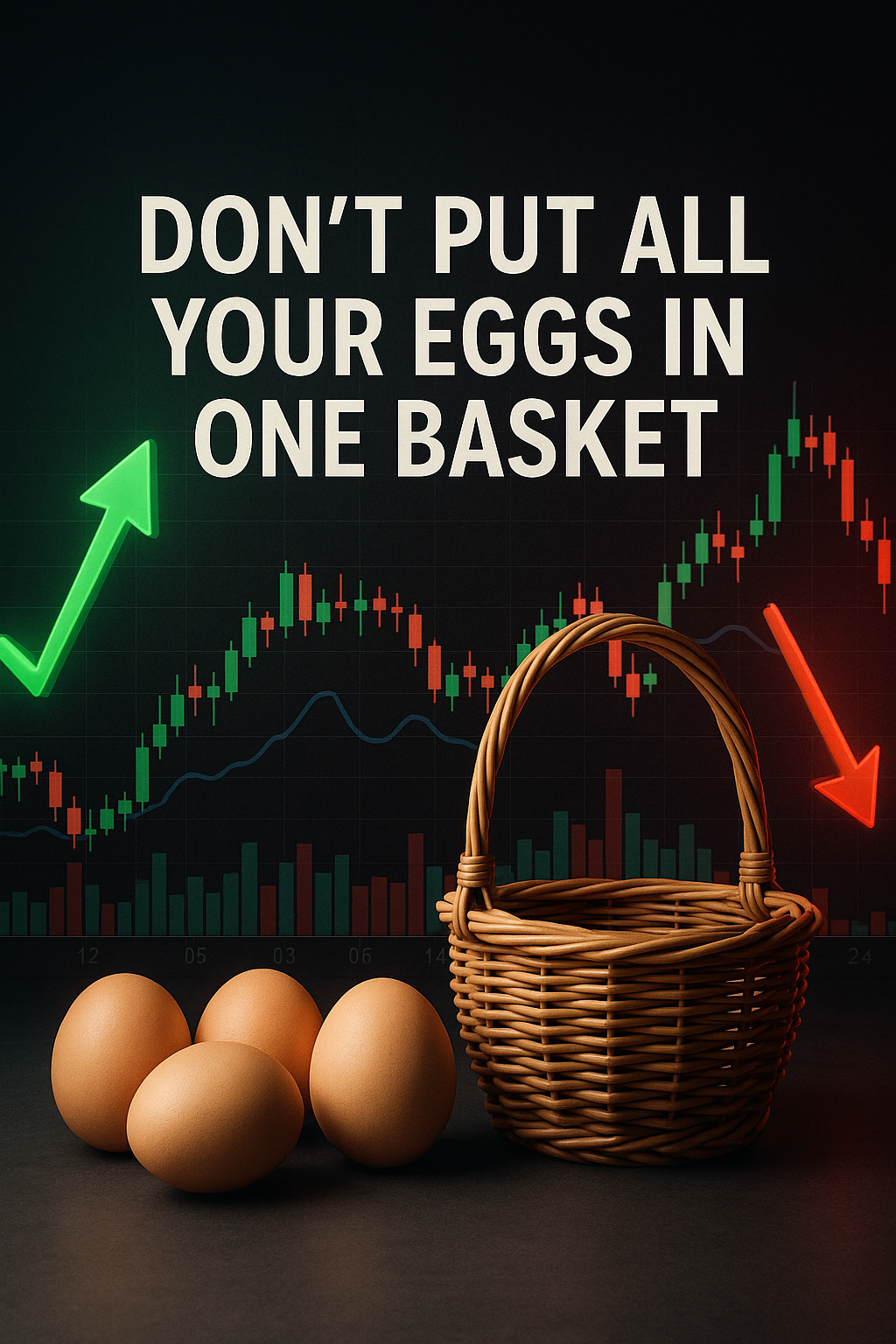
It is the oldest advice in the book: do not put all your eggs in one basket. However, in the 2026 trading landscape, the baskets are often connected by invisible strings. If you are long on EUR/USD, GBP/USD, and AUD/USD, you are not diversified. You are simply “Short USD” in three different ways. One Federal Reserve announcement will move all three baskets simultaneously.
Advanced traders utilize a Correlation Matrix to ensure their “diversification” is mathematically valid. We look for assets that are “decoupled” or have negative correlations. If your portfolio is too tightly correlated, your risk of a total account wipeout- known as systemic liquidation- increases exponentially. Brokers love overexposed portfolios because they know a single news event will trigger a margin call across all positions at once.
Smart operators constantly review their exposure to specific themes, sectors, or regions. This is especially true when dealing with CFD Trading, where the use of leverage can mask the true weight of your positions. You are not just managing a trade; you are managing a fund.
To avoid turning your portfolio into one giant omelet during a market scramble, you must learn to identify Cluster Risk. This is the difference between a gambler and a professional market participant. Before adding another position, perform a “Broker Audit” on your own exposure by understanding how they handle your margin in our Advanced Risk Management Guide.
Hedging Protocols: Insurance for Your Equity
If trading were a game of high-stakes poker, hedging would be your poker face and your emergency parachute combined. In the institutional world, hedging is not about “doubling down”; it is a clinical method used to offset potential losses during periods of extreme market uncertainty.
Think of hedging like wearing a high-grade raincoat during a market storm. You might still get wet, but your core strategy will not catch a cold. Advanced traders use various instruments to protect their downside. For instance, if you are long on an index but sense a short-term reversal, buying “Put Options” or shorting a correlated asset allows you to stay in your long-term thesis without suffering the full weight of the drawdown.
Beware of the “dark side” here: many predatory brokers will attempt to prevent you from hedging by using “FIFO” rules or charging double margin for hedged positions. This is because a perfectly hedged trader is a trader the broker cannot easily liquidate. To understand how to bypass these traps, you must learn How to Choose a Broker that supports institutional-grade execution.
Ultimately, hedging does not eliminate risk- it manages it. It smooths the equity curve and gives you psychological control when markets decide to throw a tantrum. Use it wisely, or you might end up hedging yourself into a state of capital paralysis. It is a critical component of the CFD vs Stock Investing debate, where the flexibility of derivatives provides an insurance layer that traditional equity holders simply do not have.
Classic Hedging Moves
- Inverse Correlation: Shorting an asset that moves in the opposite direction of your primary position.
- Options Protection: Using “Puts” to lock in a floor price for your long holdings.
- Futures Locking: Hedging currency risk with futures contracts to secure exchange rates.
The Leverage Weapon: Avoiding the Margin Trap
Leverage is the most dangerous tool in the retail trader’s arsenal. While it is marketed as a way to “amplify profits,” its true purpose in a B-Book environment is to amplify the speed of account liquidation. Professional operators treat leverage as a double-edged sword, carefully monitoring margin requirements and maintaining significant capital buffers to withstand “Stop Hunts.”
Never use maximum leverage without calculating the “Margin Call Distance.” If your broker offers 1:500 leverage, a mere 0.2 percent move against you can wipe out your entire margin requirement. This is why many Forex Broker Scams rely on high leverage to ensure that retail clients are “cleaned out” before they even have a chance to see their trade thesis play out.
Advanced risk management dictates that you should only use leverage to facilitate a position size that fits your 1 percent risk rule, not to bypass it. If you find yourself increasing leverage to “make up” for previous losses, you have officially moved from trading to gambling. For a deep dive into the mechanical reality of these numbers, read our guide on Leverage in Trading.
The goal is to remain “Anti-Fragile.” This means being ready to reduce positions or add margin when the market turns volatile. In the professional world, capital preservation is the only metric that matters. If you cannot survive a 10 percent “Flash Crash,” your leverage is too high.
The 1:500 Reality
At 1:500 leverage, your account is statistically likely to hit a margin call within 48 hours if you use full buying power. The broker knows this.
The Institutional Standard
Most professional hedge funds rarely exceed 1:10 effective leverage. They prioritize staying in the game over “get rich quick” fantasies.
Mind Over Market: The Psychological Edge
Imagine trading without emotions. You would operate like a clinical algorithm, executing high-probability setups with zero hesitation and exiting losing trades without a second thought. Sadly, most retail participants operate on a spectrum of fear and greed. This “emotional volatility” is exactly what B-Book brokers harvest for profit.
Even the most mathematically perfect strategy will fall apart faster than a house of cards in a wind tunnel if your emotions take the wheel. The urge to “revenge trade” after a loss is a biological response that institutional professionals have learned to suppress. They understand that a loss is simply a business expense, not a personal failure.
Top-tier operators maintain their edge by sticking to a rigid protocol: journaling every trade, reviewing past mistakes with cold objectivity, and adhering to their plan like it is duct-taped to their forehead. For a deeper look at the mental framework required for this, explore our Trading Psychology Guide.
You must also remain hyper-aware of Trading Biases– those sneaky mental shortcuts that trick you into thinking you are a genius right before the market humbles you. The “Truth” is that the market does not care about your feelings, your mortgage, or your ego. It only cares about liquidity.

Evolve With the Market: The Audit Protocol
Financial markets are not static; they are complex, adaptive systems. A risk management plan that worked during the low-volatility environment of last year may be completely obsolete today. Professional traders operate on a “Continuous Review” cycle. They do not wait for a margin call to tell them their strategy is failing; they use data to spot the decay before it becomes terminal.
This adaptation requires a weekly “Institutional Audit” of your portfolio. You must analyze your win rate, your expectancy, and most importantly, your Maximum Drawdown. If your current losses exceed your historical backtest, the market environment has likely shifted. In the professional world, this is when you “Fire” your strategy and move to the sidelines until a new edge is identified.
Adaptability is the ultimate differentiator. Those who get stuck in losing patterns are usually the ones who have fallen for the “Sunken Cost” fallacy. They keep adding capital to a losing position, hoping the market will “eventually” turn. To avoid this trap, you must master the transition from a Forex Trading Guide mindset to an institutional capital allocator mindset.
The “Dark Side” of the broker model relies on your refusal to change. They want you to stay stubborn while their algorithms harvest your remaining margin. By staying fluid and data-driven, you break the cycle. If you are just starting this journey, ensure you know How to Start Trading with the correct structural foundation so you don’t have to unlearn expensive mistakes later.
The 2026 Audit Checklist
- ✔ Expectancy Check: Is your average win still higher than your average loss?
- ✔ Volatility Scan: Have market ranges expanded beyond your ATR multipliers?
- ✔ Broker Health: Is execution speed and slippage remaining within professional limits?
Take Control of Your Trading Future
Think of trading like tightrope walking over a canyon of institutional liquidity. Without an advanced risk management protocol, you are not just walking without a net; you are doing so during a seismic shift.
Mastering these sovereign strategies will not only protect your capital from the “Dark Side” of the industry but will also grant you the psychological peace required to execute when others are panicking. You are no longer a retail target; you are a professional market participant.
Explore more: Broker Scams | Signals Truth

 TradeUnfold