
Hidden Fees: The Silent Mechanics of Account Destruction
In the digital age of “zero commission” marketing, the real costs of trading have moved into the shadows. While you calculate your entry, your broker has already calculated their take. We unfold the truth about the invisible drains on your balance.
Report Briefing:
No matter if you win or lose, the industry is built to ensure the house is fed first. This intelligence report exposes the quiet, calculated fees that turn potentially profitable systems into capital ruins. If you do not see the fee, you are the product being sold.

The Parasitic Reality of Modern Brokerage
When most people start trading Forex, CFDs, or through a prop firm, they are laser focused on strategy, indicators, and entry signals. They treat the platform as a neutral tool for market access. This is the first and most expensive mistake. As we explained in our cornerstone intelligence report, The Truth About Forex Brokers, the vast majority of brokers profit when you lose.
To truly understand the industry, you must distinguish between the different execution models. In our deep dive on A-Book vs B-Book models, we unfold how “Market Makers” manage your trades. While an A-Book broker passes your trade to the real market, a B-Book broker keeps the risk in house. This creates a direct conflict of interest where your loss is their gain.
Even the so called “reputable” STP or ECN brokers benefit when you trade more, regardless of your success. Every time you click that buy or sell button, a small piece of your capital is sliced off and moved to their balance sheet. This constant friction is one of the many dark side trading traps that retail participants fall into daily. They do not want you to trade well; they want you to trade often until your margin is depleted.
For those who are just starting, our Forex trading guide provides the foundational knowledge needed to navigate these waters. However, understanding the mechanics of the house is what separates a victim from a professional operator. In this industry, if you are not aware of the costs, you are not a customer; you are the raw material for the broker’s profit engine.
“But you and me, the brokers, we are taking home cold hard cash via commission, motherfucker.”
— Matthew McConaughey, The Wolf of Wall Street
1. Spreads and Price Skewing
Brokers proudly advertise “raw spreads” or “0.1 pip” averages. These numbers are marketing bait designed to lure you into the high frequency trap. Think of it like a “buy one, get one free” offer where the second item is actually invisible. The reality is that spreads are dynamic and under the total control of the broker’s internal algorithms. During news events, those spreads balloon faster than a politician’s ego.
The Dark Secret: Price Skewing. Many brokers use “Virtual Dealers” to skew the price feed. If they see a cluster of retail stop losses, they can artificially move their internal price to hit those stops, even if the real market never touched that level. This is why understanding the A-Book vs B-Book reality is so critical. In a B-Book environment, the broker is essentially the house in a casino, and they are not above tilting the table to ensure you lose.
This “gotcha” moment is how they ensure your trade is liquidated at the worst possible price. While you blame the market for being “crazy,” the broker is quietly banking the difference between their fake price and the true market value. It is the only business where the person selling you the umbrella can also control when it starts raining.
In simple words: they move the goalposts right before you kick the ball. It is not personal; it is just their business model. They need your liquidity to fuel their profit margins, and a well-placed price skew is the most efficient way to get it.

2. Commission Confusion
“Zero Commission” is the ultimate clickbait of the retail world. It sounds like a gift, but in this industry, a gift usually comes with a hidden bill. If you are not paying a transparent per lot commission, the broker is simply marking up the spread. This is actually worse for the trader because it creates a blurred entry price, making your Institutional Trading Protocol setups much harder to execute with precision.
On the other hand, ECN brokers often hide their commissions in the back end of your profit and loss statement, away from the flashing lights of the main chart. Unless you are meticulously auditing every line item of your trade history, you are missing the slow bleed. Let us look at the forensic math: on a standard lot, a seven dollar commission round turn seems small. But for a scalper taking ten trades a day, that adds up to eighteen thousand dollars a year in overhead.
That is the price of a luxury car handed over to your broker just for the privilege of clicking “buy” or “sell.” They do not need you to be profitable; they just need you to be active. The more you churn your account, the more they harvest in fees, regardless of whether your strategy is actually working.
In this industry, there is no such thing as a free lunch. If the service appears free, you are not the customer; you are the product. Your hard earned capital is the raw material, and your commissions are being quietly munched on while you are busy trying to survive the next candle.

3. Swap Fees: The Overnight Tax
If you hold trades past the New York close, you are paying swap fees. In a fair world, these would be simple interest rate differentials. In the broker world, swaps are a magic trick used to make your profits disappear while you sleep. They take the interbank rate and apply a “markup” that would make a loan shark blush.
The most predatory tactic is the “Double Negative.” You might be long a pair where you should be receiving interest, but the broker marks it down so much that you still end up paying. Then, if you go short, they charge you there too. It is mathematically impossible for both sides of a trade to owe interest at the same time, yet in the land of CFDs, physics works differently.
The Wednesday Triple Threat: Have you ever wondered why your account balance takes a massive hit on Wednesday night? Brokers charge triple swaps on Wednesdays to account for the weekend. It is the one day of the week where the broker effectively becomes a silent partner in your trade—except they only share in the costs, never the profits.
For a swing trader, these fees are a silent killer. Over a few weeks, a winning trade can have 20% of its gains eaten by the swap tax. It is the only industry where you get penalized for being right and having the patience to stay in the market. Sweet dreams, but remember: the broker’s meter is always running.
4. Inactivity Fees
Deciding not to trade is often the most professional decision a trader can make. In a world of noise, sitting on your hands is a superpower. However, brokers absolutely hate a disciplined trader. To them, you are a machine that stopped producing coins. To fix this, they implement “Inactivity Fees” to punish your patience.
They call it an “account maintenance” fee, as if they are personally dusting off your digital server every night. In reality, it is a penalty for not providing them with spread and commission revenue. It is the only industry where waiting for a high probability Institutional Trading Protocol setup results in a monthly fine.
Think about the logic here: they are charging you to not use their product. It is like a gym charging you extra for every day you do not show up to use the treadmill. Why? Because they know that if they nibble away at your balance, you will eventually feel the “need” to trade just to justify the cost.
This is a psychological trap. They are not trying to maintain your account; they are trying to trigger your “loss aversion” bias to force you back into the market when you have no edge.

5. Withdrawal & Conversion Traps
Withdrawing your own money should be a simple transaction. Instead, it is often the final hurdle where brokers take one last bite of your profits. Between wire transfer fees, intermediary bank charges, and flat “processing” fees, the cost of leaving the casino can be staggering.
The real hidden killer is the Currency Conversion Spread. If your trading account is in USD but you withdraw to a EUR or GBP bank account, the broker will often use an internal exchange rate that is 2% to 3% away from the spot price.
They are not just charging you a fee; they are trading against you one last time as you exit. Always audit the exchange rates used during your Advanced Risk Management planning, or you might find that your hard earned profits have vanished during the transfer.
6. Slippage and Artificial Requotes
Slippage is the industry’s favorite excuse for execution failure. While they market it as a “natural market phenomenon,” the truth is far more calculated. As we detailed in the Truth About Forex Brokers, many platforms use specialized bridge software to ensure slippage only ever happens in one direction. It is like a revolving door that only lets you in when the broker is ready to take your coat.
This micro-theft happens in the blink of an eye. By adding an artificial delay of just 50 milliseconds, the broker can wait for a price tick that favors their balance sheet, not yours. If you are trading with a B-Book Market Maker, this delay is their most powerful weapon. If the market moves in your favor, you get a “Requote” or a rejection. If it moves against you, they fill you instantly at the worst possible price.
The “Gotcha” Logic: To a retail trader, a few pips of slippage feels like bad luck. To a broker handling ten thousand lots, it is a multi-million dollar revenue stream built entirely on the friction of your entry. It is the digital equivalent of a supermarket “rounding up” your bill to the nearest dollar and pocketing the change.
This is a direct hit to your trading psychology. You start doubting your setups because you are always entering late and exiting early. You are not fighting the market; you are fighting an execution engine designed to give you the leftovers. Stop thinking of slippage as “volatility” and start seeing it as a silent commission.

7. Hidden Markups on Execution
The term “True ECN” is thrown around the industry like a participation trophy. Many traders believe it means they are seeing the raw heartbeat of the market. The reality? The broker still sits in the middle, acting like a toll booth operator on a highway you thought was free. They receive a price of 1.08502 from their liquidity provider and show you 1.08505. You do not even feel the pinch because it is only three tenths of a pip, but that tiny shave is where the real money is made.
The Art of Price Shaving: Over a large sample size of trades, these microscopic markups erode your positive expectancy. It is the death by a thousand cuts. While you are busy analyzing the macro trends and waiting for a five minute candle to close, the broker is harvesting fractions of pips from every single participant. They do not need you to lose your whole account in one day; they are perfectly happy nibbling on your capital for months.
When you add these markups to the spread, the commission, and the slippage, your “break-even” point moves further and further away. It is like trying to run a race while someone is standing on your shoelaces. You are not just fighting the other traders or the big banks; you are fighting a mathematical disadvantage built into the very fabric of the platform.
Simple logic: if a broker spends millions on marketing to tell you their spreads are “raw,” they are likely getting their protein from the markups you cannot see. Always question the “transparency” of a middleman whose profit depends on the gap between what they pay and what you pay.
8. Prop Firm Trickery
The modern prop firm industry has revolutionized how retail traders access capital, but it has also introduced a new layer of predatory fees that would make a loan shark blush. As we cover in our Prop Trading Guide, the “Evaluation Fee” is not a service charge for a test. It is the primary product of the firm. Statistically, over 90% of traders fail these evaluations, which means the firm is not looking for talent; they are looking for “reset” fees.
The Ponzi-Adjacent Reality: Many firms operate on a “Demo-to-Payout” model. You are not trading real capital; you are trading play money on a server. The firm pays your “profits” using the evaluation fees from the thousands of traders who failed before you. If everyone starts winning at once, the firm disappears overnight.
Beyond the initial fee, firms use “Inconsistency Rules” and “Relative Drawdown” to disqualify winning traders on technicalities. They often pair you with internal brokers that feature massive spreads and simulated slippage to ensure your capital preservation strategy is tested to its breaking point. It is like trying to win a marathon where the organizers are allowed to move the finish line whenever you get too close.
If you manage to get funded, the fees simply change names. You might be hit with monthly “professional data fees” or platform maintenance costs that exist only to chip away at your profit share. In this environment, you are not a partner; you are a yield-generating asset for the firm. If you do not produce commissions or fail fees, they have no use for you.
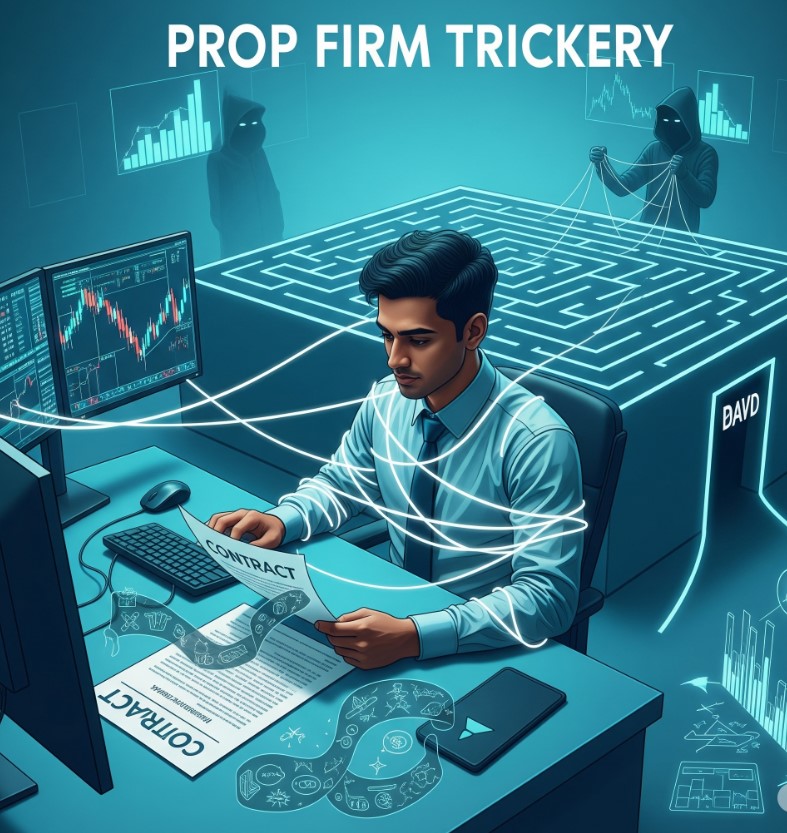
The “Fail Rate” is the engine that drives the prop firm economy.
How to Protect Your Capital
Audit Every Fill
Compare your execution price against independent data feeds like TradingView or Reuters. If you consistently see 1 or 2 pips of negative slippage, your broker is shaving your profits.
Calculate Real Yield
Subtract commissions and swap fees from your gross profit to find your net expectancy. If fees consume more than 15% of your gains, you are trading in a toxic environment.
Use Raw Spread Accounts
Always opt for commission based accounts over “Zero Commission” models. Transparency in fees is the only way to accurately apply an Institutional Trading Protocol.
Track Positive Slippage
A fair broker will occasionally give you a better fill than requested. If you only ever experience negative slippage, the house is using a “Virtual Dealer” plugin against you.
The Forensic Verdict
Hidden fees are the termites of the trading world. They do not kill your account with one giant bite; they consume it from the inside out, one fraction of a pip at a time. While you are distracted by shiny indicators and complex harmonic patterns, the broker is quietly harvesting the friction of your activity.
Trading is a business of margins. In any other industry, a 3% overhead cost on every transaction would be considered a crisis. In retail trading, it is the standard. Your job is not just to find winning trades, but to find the most efficient environment to execute them.
Stop being the exit liquidity for your broker’s bottom line. Protect your capital, audit your fills, and never assume that “Zero” means free.
Continue Your Intelligence Audit
The trading industry survives on the information gap between the “House” and the retail trader. Knowledge is not just power; it is the only shield you have in an ecosystem designed to harvest your capital. Explore our forensic deep dives to bridge that gap.
UNFOLD THE TRUTH • TRADEUNFOLD FORENSICS
© 2026 Internal Intelligence Document • All Rights Reserved
 TradeUnfold