
Navigating the Mindfield
Unfolding the 11 Biases Killing Your Profits
Your brain is not built for the markets. It is built for survival. The same mental shortcuts that kept our ancestors alive now act as psychological biases that drain your trading account.
Forensic Briefing:
In our core Trading Psychology Guide, we looked at the broad dark side of the industry.
Now we are going deeper. We are auditing the 11 specific software bugs in your head that brokers use to generate their own liquidity. To stop the dramatic meltdowns, you must outsmart your own biology. This is the only way to reach consistent results.
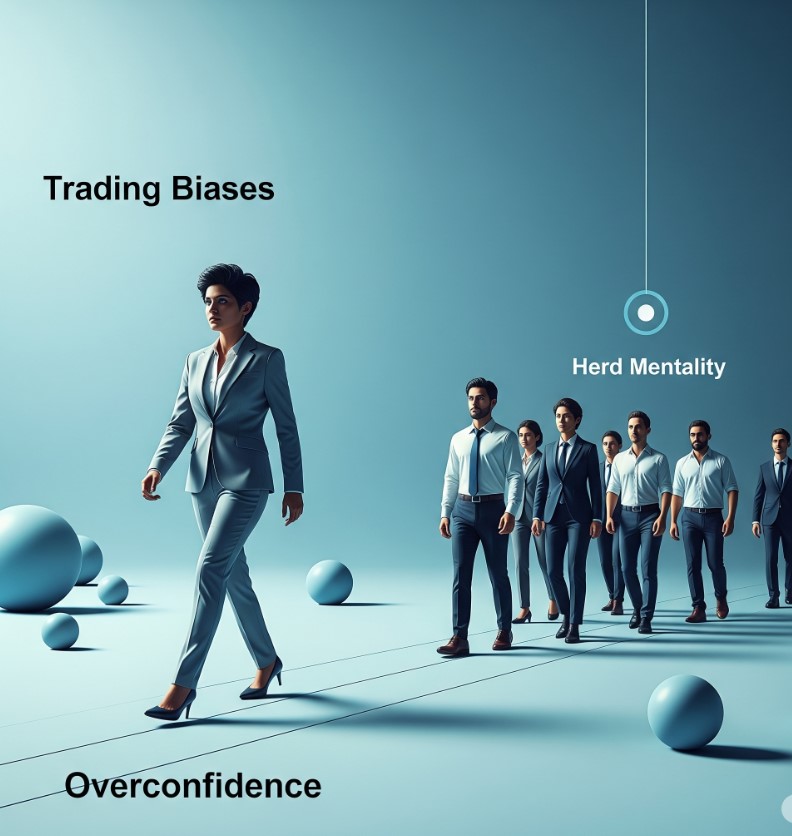
The Biological Survival Mismatch
The human brain is an amazing tool for staying alive in the wild. If you hear a loud noise in the bushes, your brain triggers a fight or flight response. This reaction happens in milliseconds. It saves your life because it does not wait for you to think. It just acts to protect your physical body from a perceived predator. This is the limbic system taking total control over your higher reasoning.
However, this exact same mechanism is a disaster for CFD trading. In the markets, a loud noise is a sudden price drop or a spike in volatility. Your brain treats that red candle like a life threatening predator. It wants you to run away by panic selling at the bottom or fight back by doubling down on a losing position. Both reactions lead to capital destruction.
Evolution did not prepare you for digital probability or the cold math of the markets. Your ancestors survived because they were reactive, but a professional trader only survives by being proactive and emotionally detached. To become a professional, you must understand that your biology is working against you every second you are in a trade. Without a strict rules based system, your natural instincts will act as a silent drain on your account until there is nothing left.
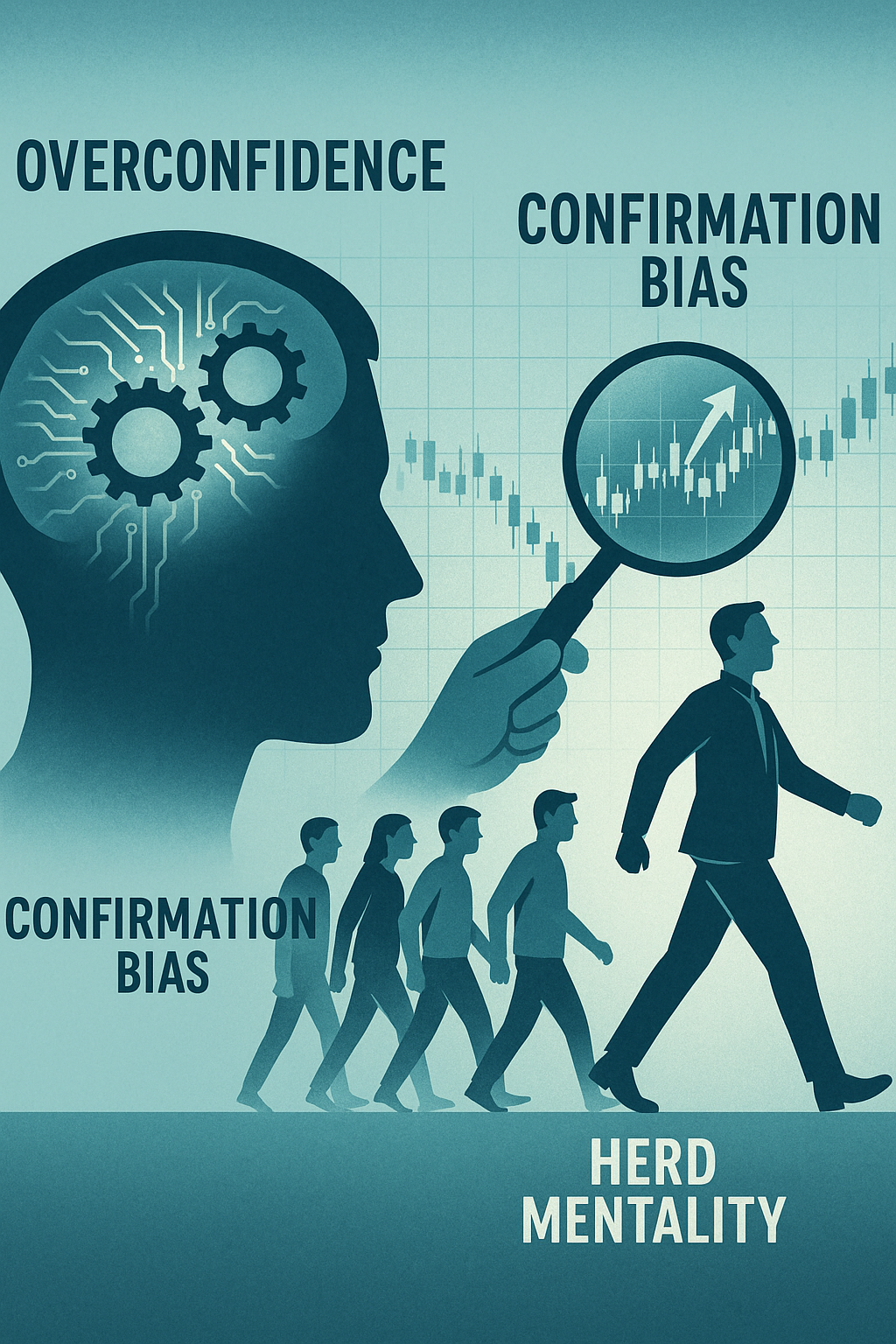
How Brokers Weaponize Your Mind
Brokers are fully aware of your biological weaknesses. They do not just provide a platform. They provide an environment specifically designed to trigger your internal biases. Every flashing light, every instant push notification, and every one-click trade button is there for a specific reason. These features are built to keep your heart rate high and your logical reasoning low.
They want you to be emotional. An emotional trader is an active trader. An active trader pays more in spreads and commissions. Even worse, many brokers profit directly when you lose because they take the other side of your trade in a B-Book model. By encouraging you to follow the crowd or chase hot assets, they lead you directly into the Institutional Protocol traps.
This is the dark side of the industry. They sell you the dream of easy money while building a trap that relies on your inability to control your own brain. This is a business of psychological warfare. This is why we must perform a full Cognitive Audit of the 11 biases that keep you trapped as their liquidity provider.
1. Confirmation Bias
This is the most dangerous bias because it makes you feel smart while you are making a massive mistake. Once you decide to buy a currency, your brain starts to filter the world. You only see the tweets, news articles, and charts that say the price will go up. You ignore the massive warning signs, like bearish engulfing candles or negative fundamental shifts, that say the trend has ended.
You are no longer an analyst. You are a defense attorney for your trade. You look for validation instead of information. This internal echo chamber is why many traders hold onto a losing position until their account is margin called. They are not waiting for a market signal. They are waiting for the world to prove them right.
To fix this, you must actively look for reasons why your trade is wrong before you ever click the button. You should be trying to invalidate your own setup. If you cannot find a reason to stay out, then you take the trade. True trading psychology requires you to be your own harshest critic rather than your own biggest fan.
2. Overconfidence Bias
Winning a few trades in a row is often the start of a total disaster for a retail trader. It creates a false sense of skill and invincibility. You start to think you have mastered the market or found a secret code that no one else sees. This is when the ego takes the driver’s seat and logic is thrown out the window.
You stop following your risk rules and start taking bigger positions with higher leverage because you feel like you cannot lose. You begin to ignore your stop losses because you are certain the market will eventually turn back in your favor. Overconfidence makes you blind to the inherent randomness of the market.
The market loves overconfident traders because they provide the largest amount of liquidity when they eventually fail. A single trade with too much leverage is all it takes to lose months of hard work and disciplined growth. You must treat every win with the same caution as a loss. In this game, your greatest enemy is not the market, but the reflection in the mirror. Always remember that trading success is about long term survival, not short term ego or being right.
3. Loss Aversion
Psychology shows that the pain of losing 100 dollars is twice as strong as the joy of winning 100 dollars. This biological quirk ruins trading accounts because it creates an asymmetrical emotional response to market movement. Because losing hurts so much, your brain will do anything to avoid realizing the loss. You keep a losing trade open and move your stop loss further away, praying for a turnaround, just so you do not have to face the emotional reality of a closed defeat.
Meanwhile, when you have a small profit, you become terrified of that green number turning red. You close the trade immediately to secure a tiny win, effectively cutting your legs off before the trade can reach its full potential. This results in the classic retail disaster where you have ten small winners that are completely wiped out by one giant loser. Professional risk management requires you to embrace the pain of small losses so you can survive long enough to capture massive trends.
4. Herd Mentality
In the wild, being part of the herd keeps you safe from predators. In the financial markets, the herd is almost always the one being slaughtered. When you see social media influencers and news headlines screaming about a specific asset, your brain triggers a biological urge to join the group. This is the root of FOMO, which causes traders to buy at the absolute top of a cycle.
By the time the general public is excited, the smart money institutions are already using that retail excitement to exit their positions. If you buy because everyone else is buying, you are simply providing the exit liquidity that professionals need to bank their profits. True trading psychology involves developing the courage to be a contrarian. You must learn to be interested when others are terrified and to be extremely cautious when the crowd is euphoric.

5. Recency Bias
Recency bias is a cognitive glitch that makes you believe that what happened in the last few hours is a guaranteed map for the next few hours. If you just suffered three losing trades in a row, your brain enters a state of trauma. You become terrified of the next signal. You assume the fourth trade will also be a loss, so you hesitate or skip it entirely. Usually, that fourth trade is the winner that would have covered all previous losses.
The market has no memory of your personal PnL. The fact that your last trade was a loss has zero impact on the mathematical probability of the next setup. Professional operators treat every trade as a completely independent statistical event. They understand that in a series of 100 trades, the sequence of wins and losses is random, but the positive expectancy of the system will prevail if they stay disciplined.
When you fall for recency bias, you stop trading your plan and start trading your last emotional state. This leads to inconsistent execution, skipped opportunities, and revenge trading. You become a slave to the most recent candle instead of a master of the overall strategy.
To defeat this, you must learn to zoom out. One day, one week, or even one month of data is just a tiny point in a lifelong trading career. Discipline is the ability to execute the 101st trade with the exact same focus and precision as the 1st trade, regardless of what happened in the 99 trades in between.
6. Anchoring Bias
Anchoring happens when your brain gets stuck on a specific price point like a ship stuck on a reef. Usually, this anchor is your entry price. You stop looking at what the market is actually doing right now and only care about getting back to breakeven. If you bought gold at 2,000 and it drops to 1,900, you are emotionally anchored to that 2,000 level. You refuse to see the new bearish trend because your mind is trapped in the past.
The market does not know your entry price and it certainly does not care where you bought. It only responds to the current flow of supply and demand. By staying anchored to an old, irrelevant number, you miss the reality of the price action in front of you. This is how a minor drawdown turns into a total account wipeout. You must train your mind to trade the chart that exists right now, not the entry price you are wishing for in your head.
7. Endowment Effect
This bias makes you value a position more simply because you own it. In the world of CFD trading, once you click the buy button, that position becomes yours in an emotional sense. You start to feel a personal attachment to the trade. You treat the currency pair or the index like a long lost friend or a personal project instead of a digital tool designed for the sole purpose of making money.
Professional operators treat their positions like disposable inventory. If a trade is not performing according to the plan, they throw it away immediately without a second thought. They have zero emotional connection to any asset class. To fix this, you must treat your portfolio like a cold business inventory. If a product is not selling, you liquidate it. Do not let sentimental value or a need to be right destroy your capital preservation strategy.

8. The Gambler’s Fallacy
This is the toxic belief that the market somehow owes you a reversal because a trend has gone on for too long. If a pair has been crashing for six days straight, the gambler’s fallacy tricks you into thinking it must go up on the seventh day. You start buying the dip without any technical signal because you think the move is overextended.
The market can stay irrational and stay in a trend much longer than you can stay solvent. Past price movements have zero mathematical impact on the odds of the next candle. Every single moment in the market is unique. When you trade based on what is due, you have stopped being a trader. You are now a gambler playing against a house that owns the math.
This specific bias is why most retail traders blow up their accounts during strong, parabolic trends. They keep adding to a losing position, convinced that a reversal is right around the corner. It rarely is. The trend usually ends only after the last gambler has been liquidated.
Mastering trading psychology requires you to follow the trend until it actually breaks based on your rules, not until you feel like it has gone too far. You trade what you see, not what you think the market owes you.

9. Hindsight Bias
Hindsight bias is the trick your brain plays after a move has already happened. You look at a chart and say “I knew that was going to crash.” In reality, you did not know. If you had known, you would have taken the trade. This bias makes the past look obvious and the future look easy.
This is dangerous because it leads to overconfidence. You start to think you have a “gift” for reading the market. Then, when you actually place a trade and it fails, you feel massive frustration because “it was so obvious last time.” You must judge your trades based on the info you had at the time, not the results after the fact.
10. Survivorship Bias
Survivorship bias happens when you only look at the winners. You see the one trader on Instagram who turned 1,000 into 100,000 dollars. You do not see the 10,000 people who tried the same strategy and lost everything. This creates a distorted view of what is actually possible.
When you only study “success stories,” you ignore the risks that lead to failure. To be a professional, you must study the losers too. You need to know how people blow up their accounts so you can avoid doing the same thing. Professional trading psychology is about looking at the full data set, not just the highlights.
11. The Disposition Effect
This is the final and most common trap. It is the combination of everything we have discussed. The disposition effect is the urge to sell winners too soon and hold losers too long. Your brain wants to lock in the “good feeling” of a win, even if the trade could go much further. At the same time, it refuses to accept the “bad feeling” of a loss.
This is why the math of retail trading often fails. To make money in the long run, your wins must be larger than your losses. The disposition effect ensures your losses are large and your wins are small. You must use hard stop-loss orders and take-profit targets to automate your decisions and remove your brain from the equation.
Final Verdict: Mind Over Market
Successful trading is not about mastering the charts. It is about mastering the man behind the charts. Every one of these 11 biases is a natural part of being human. You cannot delete them, but you can build a system to manage them. By using a trading journal, sticking to a strict plan, and treating every trade as a simple probability, you move from being liquidity for the brokers to being a professional operator.
Stop Being Liquidity
The industry is designed to keep you emotional, active, and losing. Brokers do not want you to master your psychology because a disciplined trader is a non profitable client for their B-Book model. To move beyond the retail trap, you must continue your education by auditing the forensic reality of the markets.
Forensic Market Intelligence • TradeUnfold 2026
 TradeUnfold