
Swing vs Scalping vs Day Trading: The House Always Wants You Clicking
The retail industry has evolved into a sophisticated machine designed to monetize your time and your emotions. Whether you are chasing pips in seconds or holding for weeks, the engine remains the same. We unfold how each trading style is positioned as a “choice,” while in reality, they are just different ways for the industry to harvest your capital.
Report Briefing:
In this forensic analysis, we expose the structural mechanics of market execution and why your chosen style might be playing right into the broker’s hands. Ignorance is no longer blissed; it is the most expensive mistake you can make.
Before You Choose Your Style: The Survival Checklist
A trading style is only as effective as the environment in which it is executed. Most retail participants fail because they choose a strategy that is mathematically incompatible with their broker’s infrastructure. Before you fund an account, you must perform a forensic audit of the platform. You need to understand the truth about forex brokers and how they manipulate the playing field. Use this checklist to verify if your provider is a partner or a predator. Failing to do so means you are entering a fight where the referee is on the opponent’s payroll.
Audit the Spread Markup
Compare the live feed of your broker against a Tier 1 interbank feed like Bloomberg or Reuters. Predatory brokers add a hidden markup to the raw spread. If the market spread is 0.2 pips but your terminal shows 1.8 pips, you are paying a massive invisible tax on every execution. This is especially lethal for scalpers because it forces your win rate to be significantly higher just to break even. This practice is a cornerstone of the dark side of trading traps that drain retail accounts slowly.
Verify Negative Swap Fees
Check the contract specifications for overnight rollover rates. Many brokers manipulate the interest rate differential to ensure that both Long and Short positions carry a negative swap. This ensures the broker profits every single day you hold a trade. For swing traders, this mechanical drain can devour thirty percent of a trade’s potential profit. Before holding trades overnight, you must understand the A-Book vs B-Book forex truth to ensure your broker is actually routing your trades to a real market.
Test Execution Speed
Use a third party tool to measure the millisecond delay between your click and the server fill. If your execution consistently takes longer than 200 milliseconds, your broker is likely using a Virtual Dealer plugin to screen your trades for their own profit. This delay allows them to fill you at a worse price if the market moves. High latency is the primary tool for B-Book internalization. Professional traders utilize the institutional trading protocol to minimize this friction and protect their entries.
Check Tier 1 Regulation
Verify the license number directly on the regulator website, such as the FCA or ASIC. Offshore licenses in tax havens offer zero protection for your capital. To protect your wealth, you must learn how to choose a broker that is legally required to keep your funds in segregated accounts. This is the first lesson in any legitimate forex trading guide. If you skip this step, you are effectively giving your money to a black box.
Unsure where to start? Read our guide on how to start trading with a focus on institutional safety.
Day Trading: The Illusion of Intraday Control
Day trading relies on a dangerous myth that intraday price action is a logical reflection of economic value. In reality, the vast majority of daily volume is driven by predatory algorithms. These machines are programmed to hunt for Retail Clusters. These are specific price zones where thousands of retail stop losses are concentrated, acting as the fuel for institutional price movement. Before you commit your capital, you must understand the dark truth about brokers and how they monetize your every move.
The London Open Trap
During the first hour of the London session, institutions create artificial breakouts. They push the price above a clear resistance level to bait retail buyers into entering long positions. Once the buy orders are flooded into the system, the smart money reverses the market. The retail breakout traders are then forced to sell their positions at a loss, which provides the deep liquidity the institutions need to drive the real trend for the remainder of the day. If you are a beginner, learning how to start trading the right way is the only way to avoid these early traps.
The News Spike Spread
During high volatility events like CPI or NFP releases, brokers utilize a mechanical tool to harvest stop losses. Even if the actual market price does not reach your stop level, the broker can widen the Bid/Ask spread by hundreds of pips for a fraction of a second. This technical widening triggers your stop loss instantly. The broker claims this is a result of low liquidity, but it is often a calculated internal adjustment designed to reclaim retail equity before the market stabilizes.
The Closing Bell Liquidity
Most retail day traders are undercapitalized and cannot afford to hold trades overnight due to high margin requirements or fear of weekend gaps. As the New York session draws to a close, these traders scramble to exit their positions simultaneously. This creates a predictable wave of market orders. Institutional algorithms use this desperate forced liquidation to fill their own exit orders at the best possible prices. You are not trading against the market; you are acting as the exit liquidity for the banks.
Scalping: The High-Frequency
Meat Grinder
The retail industry markets scalping as the “elite” way to trade. They show you lightning-fast charts, 1-minute candles, and talk about “collecting pips like a pro.” What they don’t tell you is that scalping is the most profitable activity for a broker and the least profitable for a retail human. In this environment, every click is a donation to the house.
When you scalp, you are fighting the Infrastructure Gap. Most retail traders operate on a standard ISP with latency between 30ms and 100ms. Institutional HFT (High-Frequency Trading) bots operate in the realm of microseconds. By the time your “instant” order reaches the broker’s server, the price has already been front-run by liquidity providers who see your intent before your trade is even filled. You are essentially fighting a war with a stick against an opponent with a drone. To understand how the big banks operate, you must study the institutional trading protocol that governs professional markets.
The Virtual Dealer and Asymmetric Slippage
Predatory brokers utilize what is known as a Virtual Dealer Plug-in. This software allows the broker to intercept your order and hold it for a fraction of a second. If the market moves in your favor during that delay, the broker gives you a “re-quote” or fills you at a worse price. If the market moves against you, they fill you instantly at the original price. Over a thousand trades, this “micro-theft” consumes your entire mathematical edge, leaving you with a blown account and no explanation why.
The War on Toxic Flow: When “Cheating” is Just Winning
On the other end of the spectrum lies a group of very technical traders who know how to exploit broker latency. They use custom software to detect price discrepancies between a fast data feed and a slow broker feed. However, if you are a trader who has mastered these technical exploits, do not expect a warm welcome. Brokers label this Toxic Flow.
In the eyes of a broker, using technology to beat their server is considered “cheating the house.” Because many retail platforms operate on a B-Book model, your profit is their direct loss. When they identify a trader exploiting latency, they will not let you trade. They will disable your account, void your profits, or intentionally degrade your execution speed until you lose money. The house always protects its own edge.
Technical Warning: The Spread Churn
If you trade 50 times a day with a 1-pip spread, you are paying 50 pips in “tax” daily. In a month, you have paid 1,000 pips to the broker. Most scalpers do not lose because of bad strategy; they lose because they are commission farmed into insolvency.
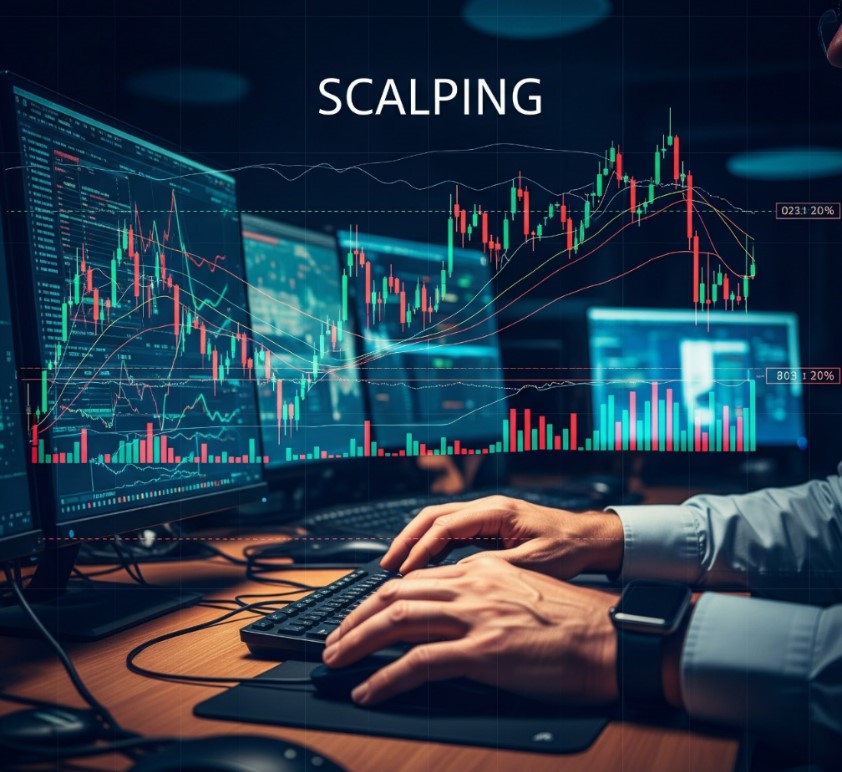
Fig 1.1: How the broker’s server intercepts retail scalping flow.
Swing Trading:
The Virtue of Patience
Swing traders are the only participants who give the human brain a fighting chance in the predatory forex environment. By moving your analysis to the Daily and Weekly timeframes, you effectively bypass the intraday noise generated by broker algorithms. You are no longer fighting for microscopic price fluctuations; you are riding the massive fundamental waves of the global economy.
The Dark Side of Rollover: Swap Fraud
While the Daily chart protects you from wicks, it exposes you to Swap Fraud. Every time you hold a trade past the New York close, you are subject to rollover interest. Predatory brokers manipulate these rates to act as a silent tax. While the interbank differential might be minimal, your broker may inflate the charge to 5 percent or 10 percent per annum. Over a holding period of several weeks, these costs compound and can devour 30 percent of your total gains. This is a primary component of the hidden trading fees that brokers never mention in their marketing materials.
The Weekend Gap and Execution Risk
The ultimate danger for the swing trader is the Weekend Gap. The retail market remains closed while geopolitical events continue to unfold. If a major economic shift occurs on Sunday, the price can jump directly over your stop loss. When the market reopens on Monday, the broker fills your order at the first available price, which could be hundreds of pips away from your risk limit. Because of this mechanical reality, position sizing is your only true defense. High leverage is a death sentence in swing trading because it removes your ability to survive these unavoidable gaps.

Pro Tip: Trading the D1 timeframe allows you to ignore 90 percent of the algorithmic stop hunts that plague the lower timeframes. Your edge is your time horizon.
The Mechanical Reality
Most traders pick a style based on a vibe. Professionals pick a style based on the math of execution. To succeed, you must understand the A-Book vs B-Book truth and how the house views your choice.
High Frequency
Intraday Action
Multi-Day Holds
Before risking capital, ensure you understand the institutional trading protocol and how it differs from retail methods.
Frequently Unfolded Truths
To truly master the markets, you must look past the interface of your trading terminal. The following answers expose the structural mechanics that determine whether you are a market participant or simply a source of yield for your provider.
Can you really scalp on a B-Book broker?
Technically, yes, but you are trading against the house. In a B-Book model, every dollar you win is a dollar the broker loses. If you become too profitable using high frequency methods, the broker will move your account to a delayed execution group. They use software to inject 200ms to 500ms of latency into your orders. This makes scalping mathematically impossible because the price you see on the screen is no longer available by the time your order is processed.
Why do day traders fail more than swing traders?
The primary reason is psychological and mathematical erosion. Day trading requires hundreds of high-stress decisions per week. Each decision is a point of failure where ego or fatigue can override a proven strategy. Furthermore, day traders pay the spread significantly more often than swing traders. Over a year, a day trader might pay 500 percent more in hidden trading fees than a swing trader, creating a massive hurdle for long term profitability.
How do I avoid “Stop Hunting”?
You must stop placing your orders where everyone else does. Professional algorithms are designed to hunt for clusters of liquidity. If you place your stop loss exactly 2 pips below a major support level, you are placing your capital in a high probability strike zone. To survive, you must understand the institutional trading protocol. Place your stops in areas where the crowd has already been liquidated. You want to enter the market when other retail traders are being forced out.
Is swap-free (Islamic) trading safer?
Not necessarily. Brokers are for-profit entities and they will collect their yield one way or another. Many brokers compensate for the lack of swap by widening the spread or charging a flat administration fee. In many cases, these fees are actually higher than the original swap would have been. Before you choose this path, you must learn how to choose a broker by meticulously calculating the total cost of carry over a thirty day period.
 TradeUnfold