
How to Choose the Right Forex Broker: The 2026 Audit Protocol
Your broker is the foundation of your trading business. Choosing the wrong one is equivalent to hiring a taxi driver who has no idea where the brakes are. In an industry built on structural imbalances, this selection is your first and most vital risk management move.
Report Briefing:
The right broker will feel like a reliable business partner, not a mysterious pen pal who vanishes when the market turns against you. We are unfolding the truth about regulation, liquidity pools, and execution speed. If you are tired of being the “liquidity” for shady offshore entities, it is time to audit your counterparty with institutional precision.

1. Regulatory Forensics: The Tier 1 vs. Offshore Mirage
Legitimacy is a commodity in the financial world. You will see logos for the Financial Conduct Authority (FCA) or the Australian Securities and Investments Commission (ASIC) displayed like medals of honor. However; the dark truth is the practice of Regulatory Arbitrage. A broker will obtain a Tier 1 license for marketing purposes but then utilize a “bait and switch” tactic during the onboarding process.
You sign up under the UK brand; but your account is actually opened in the Saint Vincent and the Grenadines subsidiary. Why? Because offshore entities have zero leverage caps; zero oversight on capital adequacy; and most importantly; they offer the broker absolute legal immunity when they decide to “gate” your withdrawals.
When you trade offshore; you are not participating in a regulated financial market. You are participating in a private; unregulated game where the broker owns the ball; the field; and the referee. We unfold the specific legal traps used to confuse retail traders in our massive report on the Dark Side of Trading Traps.
True fund security requires Segregated Client Accounts held at Tier 1 global systemic banks. A professional audit means checking the “Custodian of Funds” agreement. If your broker is using your deposits to pay their office rent or marketing bills; you are in a Ponzi scheme masquerading as a brokerage.

2. The Cost of Liquidity: Unfolding the Hidden Tax
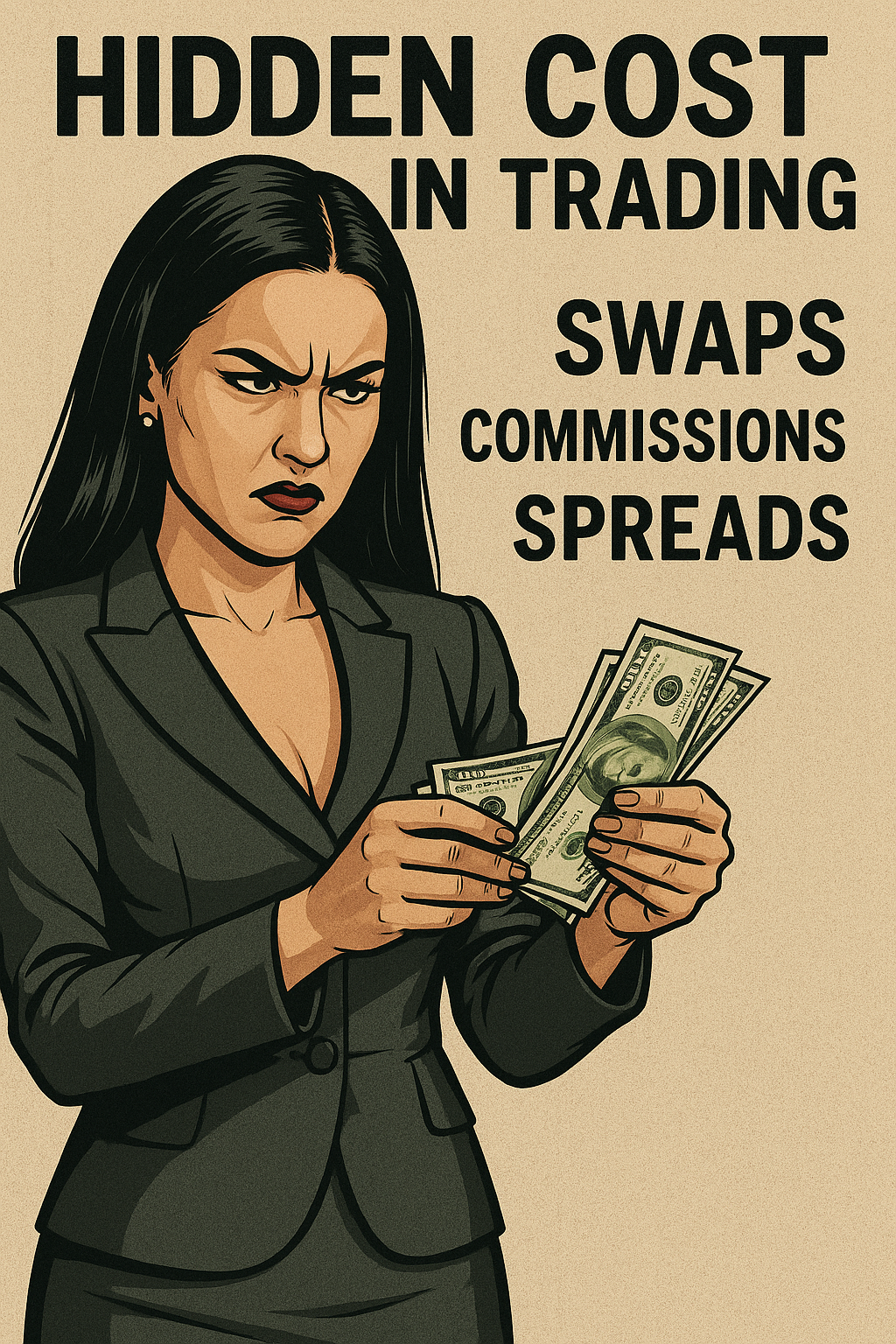
“Zero Commission” is the most successful lie ever told in the financial industry. In the decentralized world of Forex; liquidity has a specific cost. If you are not paying a commission; you are paying through Artificial Spread Markup. A B-Book broker will take the real interbank spread and widen it by 1 or 2 pips. Over 1,000 trades; this “invisible” cost can equal the entire value of your initial deposit.
Even more predatory is the Swap Markup. When you hold a position past 5:00 PM EST; you are subject to the interest rate differential between the two currencies. Retail brokers manipulate these rates to ensure that even if the interest rate gap is in your favor; you still pay a fee.
On “Triple Swap Wednesday;” the broker charges three days of interest in a single night. For a swing trader; this is a death sentence. Your edge is slowly eroded by a thousands cuts of financing fees. We have provided a surgical breakdown of how to identify these predatory spreads in our guide to Hidden Trading Fees.
To trade like a professional; you must demand Raw Spreads. This means you see the actual price that banks are quoting each other; and you pay a transparent; fixed commission for the service. Anything else is a smoke and mirrors game designed to drain your account while you think you are “trading for free.”
3. Execution Models: The Internalization Conflict
To understand the dark side of trading; you must understand where your order goes once you click “Buy” or “Sell.” In a B-Book Internalization model; your order goes nowhere. The broker simply records the trade on their own private ledger and takes the other side of the risk. They are the casino; and you are the player. If you lose money; the broker keeps that money as pure profit. This creates a structural incentive for the broker to ensure you fail.
Predatory brokers use sophisticated software known as “Virtual Dealer Plugins.” These allow the broker to manually or automatically delay your execution by a few hundred milliseconds. During high volatility; this delay ensures you get a worse price (Slippage); effectively transferring equity from your account to theirs before the trade even opens. They also employ “Stop Hunting” algorithms that artificially widen spreads to hit clusters of retail stop losses during low liquidity hours.
The alternative is the A-Book or ECN (Electronic Communication Network) model. Here; the broker acts as a pure intermediary; passing your trades directly to institutional liquidity providers like JPMorgan; Deutsche Bank; or Citibank. The broker makes money by charging a transparent commission on your volume. They want you to win because a winning trader stays in the market for years; generating consistent commission revenue.
Many “Hybrid” brokers claim to be A-Book but actually “profile” their clients. They use AI to identify losing traders and keep them on the B-Book; while moving profitable traders to the A-Book. This is why many traders notice their execution quality drops significantly once they become consistent. We unfold these predatory mechanics in our investigation into A-Book vs B-Book Forex Truth.
The B-Book Red Flag Audit
- Massive deposit bonuses (e.g. 50% or 100%)
- Negative slippage on winning trades; never on losers
- Account managers giving “trade ideas” or signals
- Withdrawal delays exceeding 48 business hours
- Spreads that widen 10x during minor news events
4. Infrastructure: The Physics of Modern Execution
In the institutional world; trading is a game of microseconds. The physical distance between your computer and the broker’s server matters more than your technical analysis. Professional-grade brokers host their matching engines in Equinix NY4 (New York) or LD4 (London). These are the same data centers used by the world’s largest investment banks.
If you are trading on a standard home internet connection with a retail broker whose servers are in the Caribbean; you are operating with 200 to 500 milliseconds of latency. In that time; the market has already moved several times. You are essentially trading a “ghost” of the price. High Frequency Trading (HFT) firms and the broker’s own B-Book desk use this latency gap to front-run your orders.
To survive; you must utilize a Trading VPS (Virtual Private Server) located in the same data center as your broker. This reduces your execution latency to under 1 millisecond. Without this; you are “Toxic Flow” to the market; easily picked off by faster participants. Latency is not just a technical detail; it is a structural tax on the uneducated.
We have documented the exact server locations and hardware requirements for a professional setup in our Institutional Trading Protocol. If your broker cannot tell you exactly which Equinix rack they occupy; they are not an institutional-grade firm.

5. The AI Trading Mirage: 2026 Fraud Protocols
As we navigate 2026; the most dangerous predator in the market is the AI-Powered Brokerage Scam. Fraudulent firms have moved beyond simple “Signal Groups” and are now marketing black-box “Neural Network” trading systems. They claim their AI has a 95% win rate and can compound small deposits into fortunes.
The dark truth is that these systems are closed-loop simulations. When you deposit capital; the “AI trades” you see on your dashboard are completely fabricated. The broker uses these fake profits to encourage even larger deposits. Once you attempt to withdraw; the system magically suffers a “technical glitch” or an “unexpected market event” that wipes out the entire balance.
True institutional AI is used for VWAP (Volume Weighted Average Price) execution and order slicing to minimize market impact; not for predicting the next 5-minute candle on EURUSD. Professional algorithmic trading requires years of back-testing and robust risk management; not a “one-click” bot provided by a broker. Read our full investigation into the AI Trading Revolution.
Protect yourself by asking for Myfxbook verified track records and third-party audits. If the broker is the one providing the “winning AI;” they are the ones who will eventually take your capital. Do not be seduced by buzzwords; be seduced by verifiable data.

6. Sovereign Capital: CFDs vs. Asset Ownership
Most retail participants do not realize they have never actually purchased a single Euro or share of Apple. They are trading Contracts for Difference (CFDs). A CFD is a private contract between you and your broker where you agree to exchange the difference in the price of an asset from the time the contract is opened to the time it is closed. You do not own the underlying asset; you own a promise from the broker.
The “Dark Side” of this derivative structure is Counterparty Risk. Since the contract is private; if the broker becomes insolvent; your “holdings” evaporate. Unlike a traditional stock brokerage where shares are registered in your name or held by an independent custodian; CFD “ownership” is only as strong as the broker’s balance sheet.
Institutional players use CFDs for high leverage; short term speculation; but they maintain their sovereign wealth in direct asset ownership. They understand that a CFD is a tool; not a vault. We unfold the structural differences and the hidden risks of derivative exposure in our investigation into CFD vs Stock Investing.
To protect your capital in 2026; you must bifurcate your accounts. Use a highly regulated ECN broker for your leveraged CFD trading; but move your profits into a Tier 1 custodian for long term asset growth. Never leave 100 percent of your net worth inside a CFD environment; regardless of how “safe” the broker claims to be.
The Ownership Audit
Ask your broker these three questions to find the truth:
- Are my funds held in a statutory trust account?
- Can you provide a daily statement of segregated funds?
- What is the name of the Tier 1 bank holding the liquidity?
7. Psychological Warfare: The VIP Trap
Brokers spend millions of dollars studying the Neurobiology of Gambling. They design their trading platforms to mimic the dopamine loops found in slot machines and mobile games. Bright green and red flashes; “achievements” for trading volume; and simplified “one-click” interfaces are all designed to bypass your logical prefrontal cortex and trigger emotional; impulsive trading in the amygdala. This is not by accident; it is a calculated architectural choice to increase the frequency of your bets.
The most sophisticated tool in this psychological arsenal is the VIP Account Manager. When you reach a certain deposit threshold; you are assigned a “personal advisor” or “premium relationship specialist.” This person will call you to offer “insider tips” on the next Non-Farm Payroll (NFP) release or provide “exclusive technical setups” that only high net worth individuals supposedly see. They build rapport; ask about your family; and try to become your friend in the market.
Understand this fundamental truth: their compensation is tied directly to your deposit volume and your churn rate. In a B-Book environment; they are effectively salespeople for the casino. Their goal is not your profitability. If they give you a tip that results in a loss; the broker wins the entire stake. If they give you a tip that results in a win; they will use that success to encourage you to triple your position size on the next trade until you eventually blow the account in a single high volatility event.
True professional trading is a lonely; quiet; and often boring process of risk management. It does not involve “insider tips” from a broker who benefits from your liquidation. These managers are trained in high pressure sales tactics designed to prevent you from withdrawing your capital. When you attempt to take money out; they will suddenly appear with a “limited time deposit bonus” or a “can’t miss trade opportunity” to keep your equity inside the house.
To protect yourself; you must identify your own mental leaks and treat the broker as a utility; not a mentor. Read our deep dive on Common Trading Biases and study the Psychology of Finance to build an emotional fortress that no VIP manager can penetrate. The moment a broker starts giving you advice is the moment you should move your capital elsewhere.
Institutional FAQ: Unfolding the Logistics
What is a ‘Negative Balance Protection’ and do I need it?
Negative Balance Protection is a regulatory requirement in Tier 1 jurisdictions that ensures you cannot lose more than your initial deposit. In high-volatility events (like the 2015 Swiss Franc move); accounts can go into the negative. While this sounds like a benefit; many offshore brokers use the ‘lack’ of this protection to claim you owe them money after a stop-out. Only trade with firms that offer this contractually.
How do I verify if my broker is actually ECN?
The only way to verify true ECN execution is through Post-Trade Transparency. Ask your broker for the execution report that shows which specific liquidity provider (LP) filled your order. If they refuse to show the LP; they are likely internalizing the trade on their B-Book. Real ECN brokers are proud of their LP depth.
Why are my withdrawals taking longer than 24 hours?
Withdrawal delays are a major red flag for Liquidity Crisis. Legitimate brokers automate the withdrawal process. If you are being contacted by a ‘Retention Specialist’ who asks why you are withdrawing or tries to offer you a bonus to stay; your capital is at risk. This is a tactic used to keep funds inside the system to cover other outgoing payments.
Forensic SEO Data
Search volume for ‘Forex Scam Recovery’ has increased by 40% in 2026. This is due to the rise of offshore ‘Ghost Brokers.’ The best recovery strategy is prevention through an institutional audit.
8. The Hall of Shame: Unfolding Historical Collusions
To understand the dark side of Forex; one must look at the precedent set by the “Big Five” banks. In the infamous 2013 Forex Probe; global giants like JPMorgan; Barclays; and Citigroup were caught colluding in private chatrooms (with names like “The Mafia”) to manipulate benchmark exchange rates. If the world’s most regulated banks were willing to rig the game for a decade; you must assume your unregulated retail broker is doing the same.
More recently; we have seen the rise of “Ghost Brokers.” These entities operate for 12 to 18 months; gather millions in deposits; and then vanish overnight. This happened with the Finanzas Forex fraud and numerous “Signal-based” Ponzi schemes that promised weekly returns of 10%. They use the complexity of the market as a veil to hide the fact that no actual trading is occurring.
The pattern is always the same: high marketing spend; unrealistic profit guarantees; and a focus on “recruitment” rather than execution quality. Professional traders must remain skeptical of any platform that prioritizes flashy social media influencers over verifiable liquidity providers. The history of this industry is a graveyard of firms that promised safety but provided only volatility.
History proves that when the market experiences a “Black Swan” event; like the Swiss Franc decoupling or the 2026 Yen Shock; it is the brokers with the weakest capitalization that fail first; taking their clients’ equity with them. Sovereign capital protection starts with historical awareness and deep due diligence into the brokerage’s solvency.
9. The Withdrawal Protocol: Bypassing the Stalls
A broker’s true nature is only revealed when you ask for your money back. Predatory firms use a “Stall Cycle” to keep your funds in the system. Common tactics in 2026 include demanding “notarized copies” of documents you already provided; claiming a “blockchain congestion” for crypto withdrawals; or citing “ongoing compliance reviews” that have no end date.
To bypass these stalls; you must treat your withdrawal like a legal process. Document every interaction. If a withdrawal takes more than 48 hours; request a Payment Reference Number (MT103) for wire transfers or a Transaction ID (TXID) for digital assets. If the broker cannot provide these; the money has not been sent.
The most effective weapon against a stalling broker is a formal complaint to their regulator. Brokers fear losing their license; even an offshore one. By preparing a forensic report of your deposit history and communication logs; you can often trigger a “priority release” of your funds. Regulators like the FCA or ASIC have specific portals for reporting broker misconduct; and using the correct legal terminology in your correspondence is often enough to move your request to the top of the pile.
Remember: It is your money. Do not let a “Retention Specialist” talk you into keeping it in the market or taking a bonus to offset a withdrawal request. A professional broker processes withdrawals as a routine utility; not a negotiation or a sales opportunity.
The 24-Hour Escape Plan
- Close all open positions to free up margin
- Remove all “Active Bonus” credits manually
- Submit a withdrawal for the full balance
- Screenshot the “Request Pending” status
- Email support with the screenshot immediately
Conclusion: The Path to Professional Sovereignty
The dark side of Forex and CFDs is designed to swallow the uneducated. By unfolding these truths; we have provided you with the institutional audit needed to survive. Your broker is either your bridge to the global markets or the wall between you and your wealth. Choose wisely.
Explore More Truths on the Blog© 2026 TradeUnfold. All Rights Reserved. Trading involves significant risk of loss.
 TradeUnfold