
What Is CFD Trading? The Intelligence Report on Synthetic Risk
A Contract for Difference (CFD) is a specialized derivative instrument that allows you to speculate on price movements without ever owning the underlying asset. While mainstream brokers market this as “accessible opportunity,” the structural reality is a closed-loop synthetic market designed to profit from retail margin exhaustion.
Operational Reality & Market Mechanics:
Value tracks inside over-the-counter (OTC) networks. This means your broker is your direct counterparty. Every dollar you gain is a dollar they lose. Most retail brokers “B-Book” your trades, betting that your lack of risk management will eventually liquidate your account.
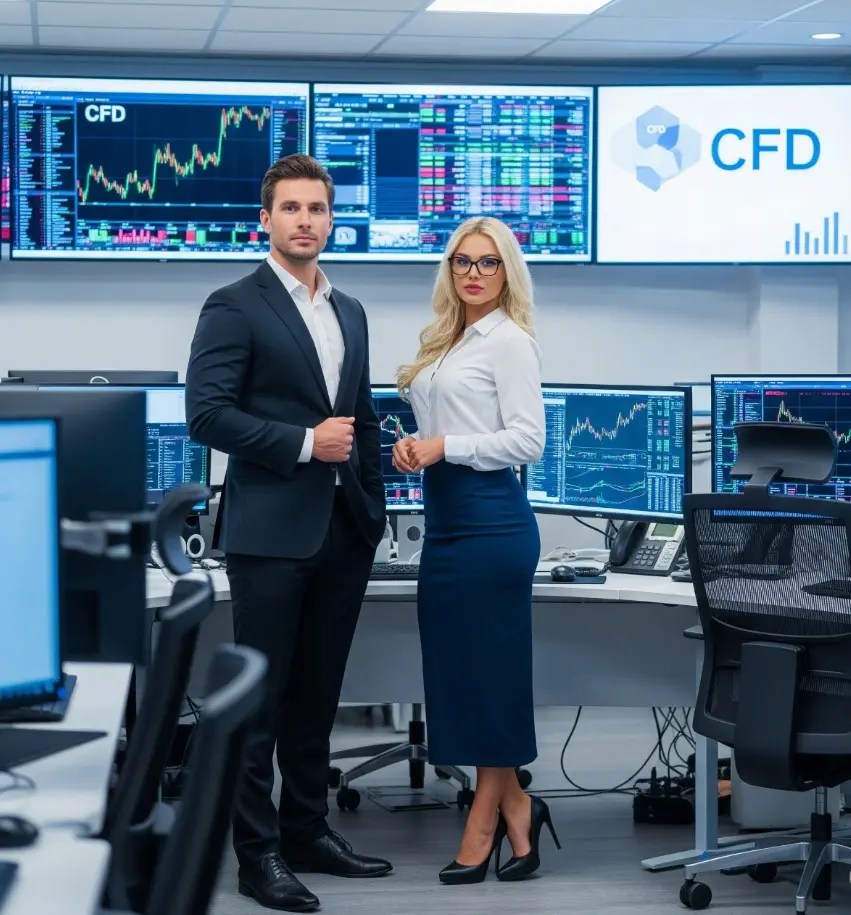
Wait: Is My Broker Betting Against Me?
In the retail CFD space, transparency is often a calculated marketing illusion. Because CFDs are traded Over-The-Counter (OTC), there is no centralized exchange to regulate price fairness. Most retail providers operate as Market Makers—meaning they don’t just facilitate your trade; they take the exact opposite side of it.
The B-Book Profit Engine:
This creates a toxic conflict of interest. If you lose $1,000, your broker gains $1,000 in pure, unhedged profit. Since they control the price feed, the margin requirements, and the execution speed, they hold every psychological and technical advantage. This is the structural foundation of the A-Book vs B-Book Truth that 90% of traders ignore until their balance is zero.
Sophisticated brokers use Virtual Dealer Plugins to manipulate execution. These tools allow the broker to “pause” your order for milliseconds—just long enough for the market to move. If the price moves in your favor, they reject the trade (Re-quotes). If it moves against you, they fill it instantly at a worse price. This is Asymmetric Slippage, the silent killer of retail accounts.

The Ownership Illusion: Asset vs. Contract
The biggest trick in the trading world is making you believe that buying a CFD is the same as owning a stock. It is not. When you “buy” Apple on a CFD platform, you do not own any shares. You do not get invited to shareholder meetings, you do not have voting rights, and you do not actually own a piece of the company.
How It Actually Works:
A CFD is just a side-bet between you and your broker. You are betting on whether the price will go up or down. Because it is just a contract and not a real asset, the broker can let you use leverage. This means they let you control $10,000 worth of “price action” with only $100 of your own money.
This sounds like a great deal, but it is a trap for the unprepared. In the real world, if a stock drops 1%, you still own the stock and can wait for it to recover. In the CFD world, if you are using 1:100 leverage and the price drops 1%, your entire $100 is gone instantly.
This is why they are called “Synthetic” markets. They are digital clones of the real market, built inside the broker’s own computer system. They aren’t designed for long-term investing; they are designed for high-speed speculation where the odds are mathematically stacked against anyone who doesn’t understand position sizing.
CFD vs. Owning the Real Asset: Side-by-Side
A quick reference for how a CFD position differs structurally from actually owning the underlying stock, commodity, or currency.
| Factor | CFD | Owning the Asset |
|---|---|---|
| Ownership | None — it’s a synthetic contract | Full legal ownership of shares/asset |
| Leverage | Often up to 1:100 or higher | Typically none, or limited margin |
| Voting Rights | No | Yes, for shareholders |
| Holding Cost | Daily overnight swap charges | None beyond brokerage fees |
| Counterparty | Often the broker itself (B-Book) | The open market |
| Downside Risk | Can exceed deposit without NBP | Capped at amount invested |
| Best Suited For | Short-term tactical speculation | Long-term wealth building |
Watch: How CFD Pricing and Counterparty Risk Actually Work
A short visual walkthrough of the mechanics covered above — synthetic pricing, the broker-as-counterparty structure, and where leverage risk actually comes from.
The Silent Killers: Spreads and Swaps
The retail industry markets “Zero Commission” trading as a psychological anchor designed to camouflage the true cost of market participation. In the CFD underworld, capital is not seized in one visible transaction; it is bled dry through engineered mechanical leaks. This capital erosion ensures that while you focus on price direction, the “house” focuses on your inevitable mathematical exhaustion.
Forensic Cost Breakdown:
1. Artificial Spreads
The “Spread” is the toll paid for market entry, but brokers can widen this gap at will. They frequently “spike” spreads during illiquid hours—such as the New York close—to trigger stop losses even when the global market price remains stable. This creates “Price Gaps” that serve as hidden traps, essentially spending your retail capital to fuel the broker’s system.
2. Overnight Swaps
Trading with high leverage transforms small market movements into total financial annihilation. Because you use borrowed funds, you are charged daily interest. These “Swaps” are weighted against you; over months, these compounding charges can consume 30% to 50% of your margin. When liquidity black holes emerge, these fair-weather “safety tools” fail.
When these factors converge, “long-term investing” via CFDs becomes a statistical impossibility. The system is engineered for high-frequency speculation where the house extracts value from every millisecond of your market exposure. Every tick of the clock facilitates the movement of wealth from your equity to the broker’s balance sheet through systemic risk maps and data failures.

The Turbo Trap: Renting a Supercar
Trading CFDs with leverage is exactly like renting a 1,000-horsepower race car. You don’t own the vehicle, but you are given the keys and told to race. Leverage is your turbo engine. It gives you the power to control massive amounts of capital—often 100 times your actual deposit—with a single click.
The Wreckage Incentive:
If the market moves in your favor, the gains are explosive. But here is the catch: if you hit a tiny bump in the road (a 1% price fluctuation), you crash. Because you are using the broker’s money to fund the trade, they won’t let you lose their capital. The moment your account cannot cover the potential damage, they trigger a Margin Call and liquidate your position.
The rental company (your broker) is quietly hoping you hit the wall. They make more profit from your total account wreckage than they ever would from tiny trading commissions. They provide the “turbo” because they know most novices lack the professional reflexes to handle the speed. They aren’t selling you a vehicle for growth; they are selling you a high-speed ticket to liquidity harvesting.
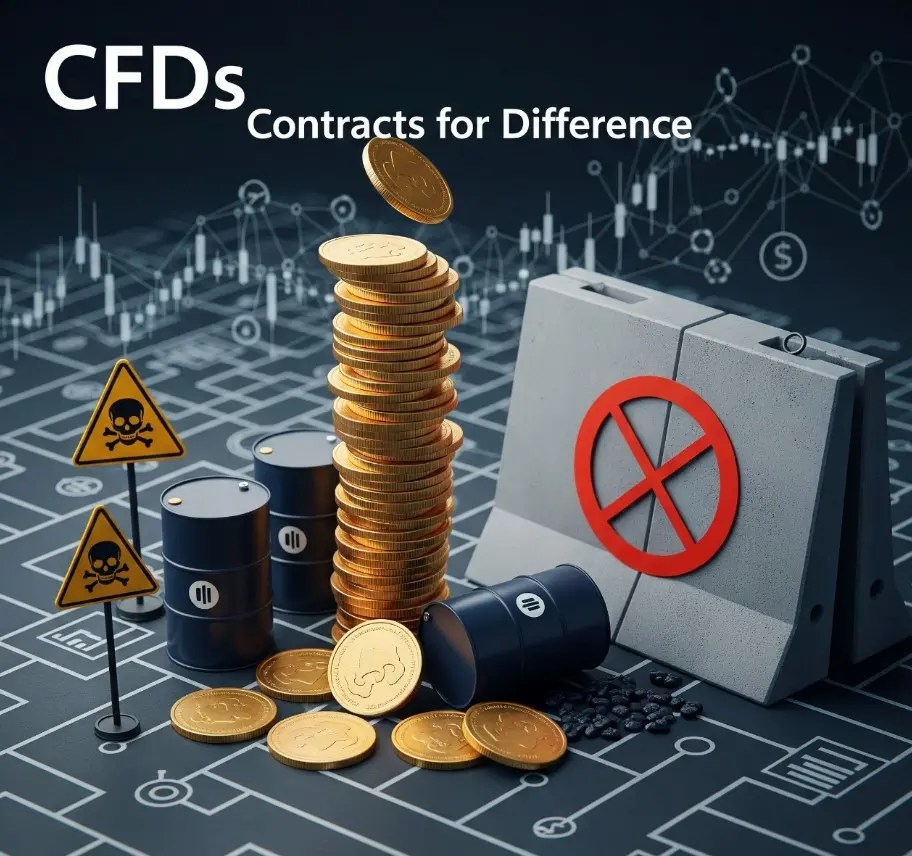
The Lifestyle Trap: Selling the Dream, Harvesting the Capital
The CFD industry does not survive on experienced traders; it survives on a constant stream of new, disposable liquidity. To keep this machine running, brokers and “gurus” don’t market financial education; they market a specific manufactured lifestyle: private jets, exotic cars, high-end watches, and beachfront property. This is a deliberate psychological attack, effectively weaponizing your own financial aspirations against you.
The Guru Mechanic: CPA & Churn-and-Burn
In the real world, professional trading is a boring, repetitive, and highly technical desk job focused entirely on mathematical probability. The “gurus” selling you Forex signals are almost never professional traders themselves. They are high-level affiliate marketers. They are paid by the broker via a Cost Per Acquisition (CPA) model.
This means the guru can earn up to $600 or more the moment you make your first deposit of your hard-earned savings. Their business has nothing to do with your trading success. Their only job is to provide fresh capital for the broker to harvest. When that influencer flashes a luxury watch on Instagram, you aren’t seeing the results of great trading; you are seeing the result of receiving a massive commission funded by the losses of the people who trusted them.
The Exit Strategy: Switching to Prop
If you have developed technical skills but lack the substantial capital required to earn a living wage, the professional path leads directly to Proprietary Trading. Most retail traders are stuck in a destructive cycle of depositing small amounts into high-leverage CFD accounts, feeding the “B-Book” furnace of brokers who profit directly from client losses. Switching to a prop firm changes the fundamental math of your career.
Alignment of Interest: Partners vs. Predators
The primary difference is the Alignment of Interest. In a standard retail brokerage environment, your broker is often the counterparty to your trade. This creates a hidden incentive for them to use “stop hunting” algorithms, artificial slippage, and spread widening to ensure you hit your margin call.
In the legitimate prop firm model, the firm only generates sustainable revenue when you are profitable. They provide the professional infrastructure and institutional-grade liquidity required to scale your strategy without risking your personal life savings. You stop being “prey” and start becoming an asset.
The rules are strict. Before you attempt an evaluation, you must read our Prop Trading Guide to understand the drawdown mechanics and consistency rules.
Why Professionals Avoid Personal Capital
Professional traders treat capital as a tool, not a personal possession. Using a prop firm allows you to trade with $100,000 or $200,000 while only risking the small fee of the evaluation. This removes the “Scared Money” syndrome—the psychological pressure that causes retail traders to close winning positions too early out of fear and hold losers too long out of hope.
By moving into the prop space, you are effectively leaving the casino and entering the institution. You stop being the liquidity for B-Book brokers and start becoming a partner to a firm that values your risk management more than your deposit volume. This is the only way to scale from a hobbyist to a career professional.
Can You Owe More Than You Deposit?
In the early days of CFD trading, a sudden market gap (like the 2015 Swiss National Bank event) could send a trader’s balance into the negative. People lost their homes because they technically owed the broker hundreds of thousands of dollars beyond their initial deposit. This is the ultimate “dark side” of the industry that most marketing materials gloss over.
The Regulatory Trap:
While modern regulators like the FCA and ESMA now mandate Negative Balance Protection, many offshore brokers do not. If you trade with an unregulated entity using excessive 1000:1 leverage, you are literally gambling with your entire net worth. If the market gaps over your stop loss, you are legally responsible for the deficit, and the broker will not hesitate to pursue legal action to recover those funds.
Professional risk management is not just a buzzword; it is a survival mechanism. It is not about how much you can win in a single trade. It is about defining the absolute maximum you can lose under the worst possible conditions.
Without institutional grade protection or a firm grasp of the legal fine print in your brokerage agreement, you are one “Black Swan” event away from total financial collapse. The truth is that most retail brokers rely on this lack of awareness to keep their profit margins high while the trader carries 100% of the systemic risk.
Taxation Law: The Hidden Bill
Beyond the mechanical drain of spreads and swaps lies a final, unavoidable layer of capital erosion: the tax implication. In the CFD underworld, beating the market and the broker is only the first half of the battle. In many global jurisdictions, CFDs are classified as capital gains assets, meaning the government effectively acts as a silent partner that only participates in your profits.
The Jurisdictional Trap:
Depending on your location, you may owe between 20% and 40% of your successful trades to the state. In the UK, many retail traders attempt to bypass this by utilizing Financial Spread Betting, which is currently marketed as tax-free. However, this “benefit” is rarely free. Brokers are well aware of the tax savings and often mathematically compensate by widening the spreads on spread betting accounts compared to standard CFD accounts.
This creates a “rock and a hard place” scenario where the trader is caught between fiscal liability to the government or increased transactional friction to the broker. Without a professional understanding of these tax wrappers, a winning year can quickly transform into a tax liability nightmare once you account for the lack of loss-carry-forward provisions in certain tax-advantaged accounts.
Always consult with a qualified tax professional before scaling your capital. The true “Dark Side” of the market is found in the legal fine print that treats retail speculative profits as low-hanging fruit for the taxman.
Frequently Asked Questions
Can you lose more than you deposit when trading CFDs?
Historically yes — a sudden market gap could push a trader’s balance into negative territory, leaving them owing the broker money beyond their deposit. Regulators like the FCA and ESMA now mandate Negative Balance Protection for regulated brokers, but many offshore or unregulated brokers do not offer this safeguard, so traders there remain legally exposed.
Are CFDs the same as buying stocks?
No. A CFD is a contract between you and your broker that tracks the price of an asset — you never actually own the underlying share, commodity, or currency. That means no shareholder voting rights and no dividends in the traditional sense, and your position exists only as a synthetic exposure inside the broker’s own system.
Is CFD trading taxed?
In most jurisdictions, profitable CFD trades are subject to capital gains tax, typically in the 20-40% range depending on location. Some traders use vehicles like UK spread betting to avoid this, but brokers often widen spreads on those account types to offset the tax advantage, so the true net cost can end up similar.
Why do most retail CFD traders lose money?
Most retail brokers act as the direct counterparty to a trader’s position, meaning the broker profits when the client loses. Combined with high leverage, hidden costs like spread widening and overnight swaps, and a lack of risk management discipline, this structure makes consistent profitability mathematically difficult for the average undercapitalized trader.
What is the difference between A-Book and B-Book brokers?
An A-Book broker routes your trade to the real market or a liquidity provider, earning revenue from a small markup or commission regardless of whether you win or lose. A B-Book broker keeps your trade in-house and takes the opposite side of it, meaning your loss is their direct profit — a structural conflict of interest. Read the full A-Book vs B-Book breakdown.
The Verdict: The Final Truth
CFD trading is a powerful tool when placed in the hands of a disciplined operator. However, for 90 percent of retail participants, it remains a direct path to ruin. The house always maintains an edge and the rules are often hidden behind complex legal jargon.
YOUR DEFENSIVE CHECKLIST:
- 🛡️ Ignore the Hype: Disregard any influencer trading on a beach.
- 🛡️ Verify Liquidity: Only use brokers with Tier 1 regulation.
- 🛡️ Master the Math: Use professional risk models before funding.
- 🛡️ Audit Execution: Track your slippage to see if your broker is skimming.
ESSENTIAL RESOURCES FOR THE TRUTH:
Trade Unfold exists to provide the transparency the industry lacks. We do not sell dreams; we provide the technical data required to survive a rigged marketplace.